
-

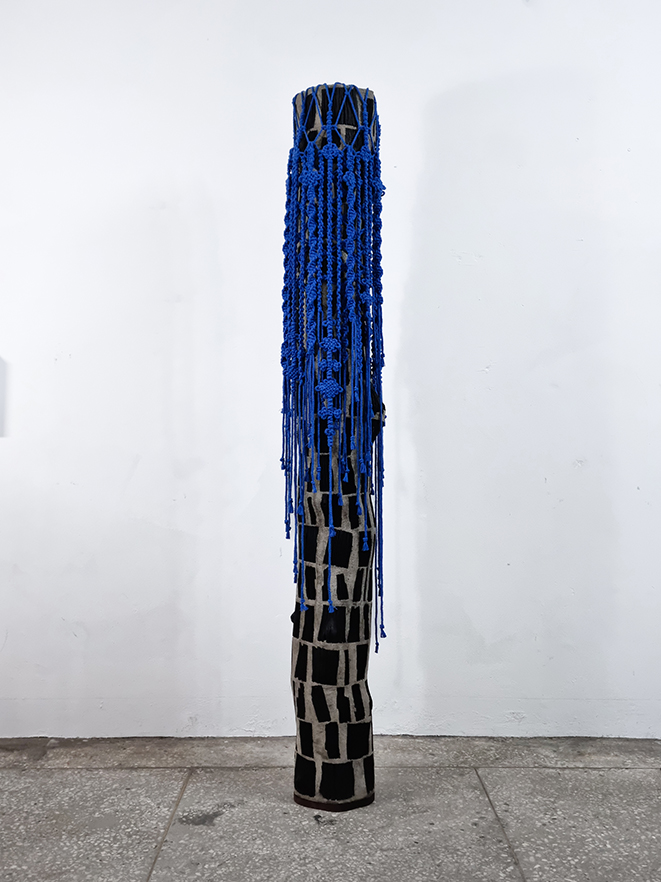
김민훈 Minhoon Kim, 태움 춤노래 세이렌 Burnt Ballad Siren, 2025, Over merbau wood, over cement and charcoal, over rope, 182 x 30 x 30cm © Courtesy of the artist
김민훈 Minhoon Kim, 태움 춤노래 세이렌 Burnt Ballad Siren, 2025, Over merbau wood, over cement and charcoal, over rope, 182 x 30 x 30cm © Courtesy of the artist
-
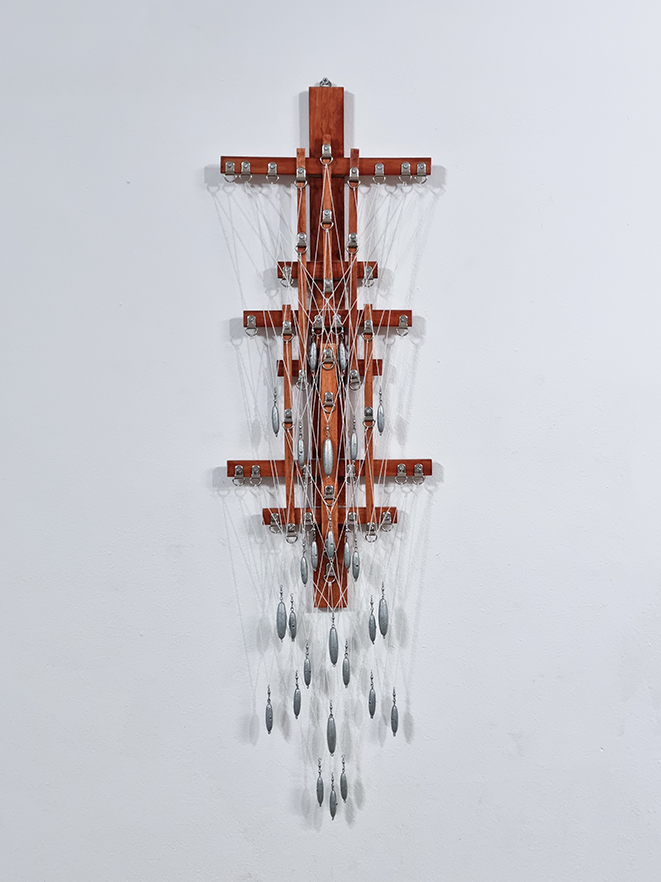
김민훈 Minhoon Kim, 날개 없고 땅 없고 몸 01 Wingless Groundless Torso 01, 2025, Over rubber tree wood, over silver powder paint, over rings and threads with lead weights, 85 x 24 x 4cm © Courtesy of the artist
김민훈 Minhoon Kim, 날개 없고 땅 없고 몸 01 Wingless Groundless Torso 01, 2025, Over rubber tree wood, over silver powder paint, over rings and threads with lead weights, 85 x 24 x 4cm © Courtesy of the artist
-

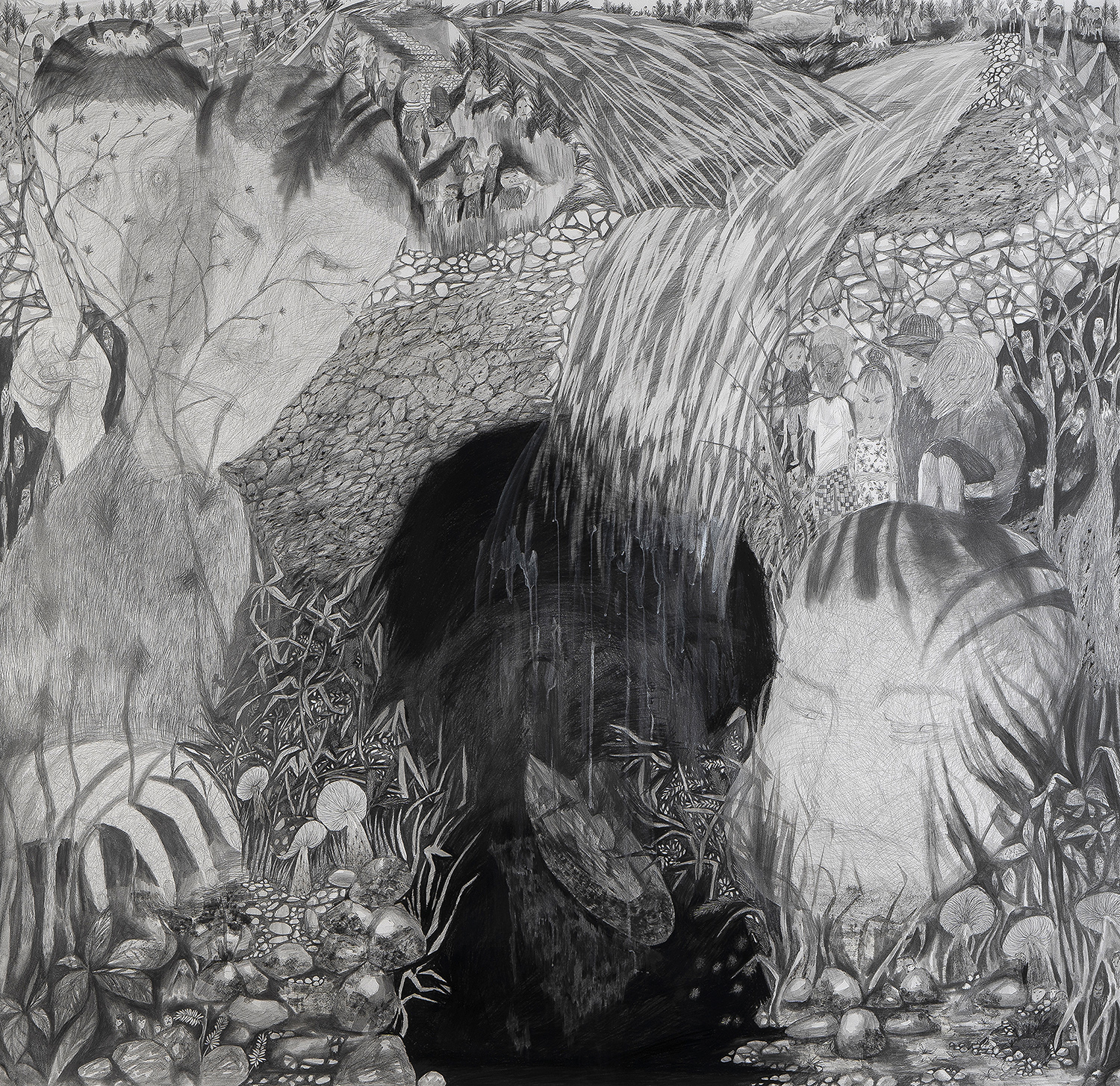
임선구 Sungoo Im, 뱉은 말, 보낸 시선, 떠도는 강 Spoken Words, Gazes Cast, Wandering River, 2018, Graphite on paper, 145 x 150cm © Courtesy of the artist
임선구 Sungoo Im, 뱉은 말, 보낸 시선, 떠도는 강 Spoken Words, Gazes Cast, Wandering River, 2018, Graphite on paper, 145 x 150cm © Courtesy of the artist
-

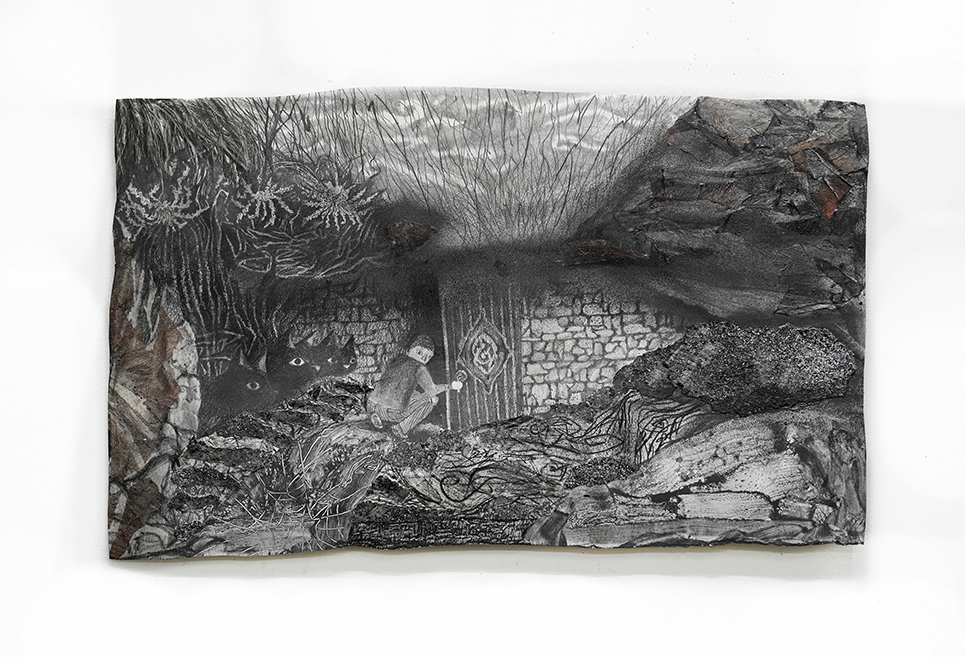
임선구 Sungoo Im, 비스듬한 방 2 Oblique Room 2, 2025, Graphite and collage on paper, 31.6 x 51.2cm © Courtesy of the artist
임선구 Sungoo Im, 비스듬한 방 2 Oblique Room 2, 2025, Graphite and collage on paper, 31.6 x 51.2cm © Courtesy of the artist
-

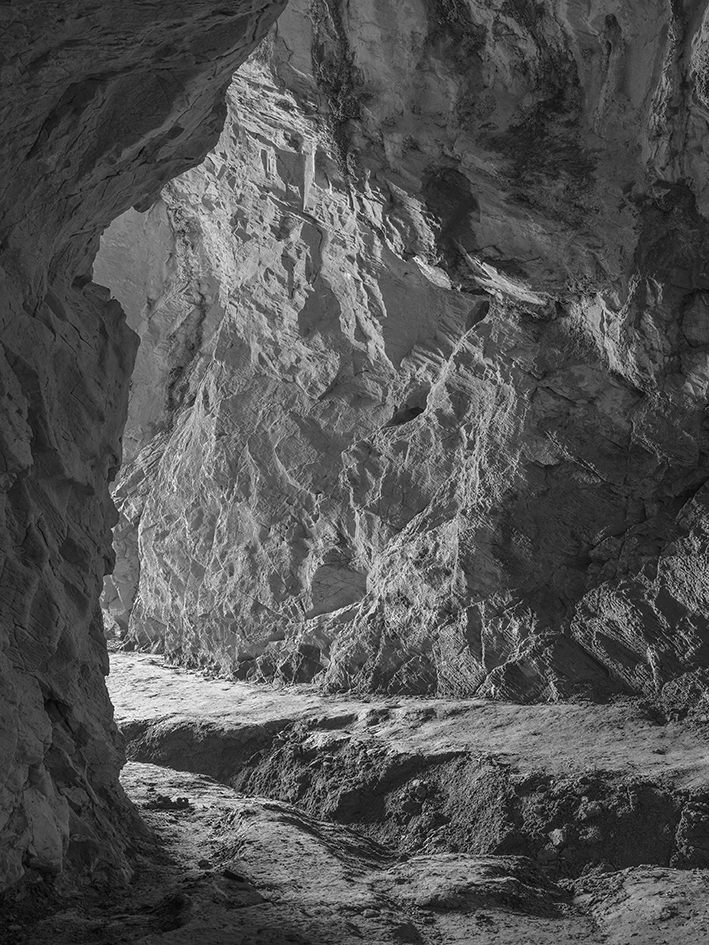
전명은 Eun Chun, 무제(금굴) Untitled (Kumgul), 2024, Archival pigment print, 68 x 51cm © Courtesy of the artist
전명은 Eun Chun, 무제(금굴) Untitled (Kumgul), 2024, Archival pigment print, 68 x 51cm © Courtesy of the artist
-
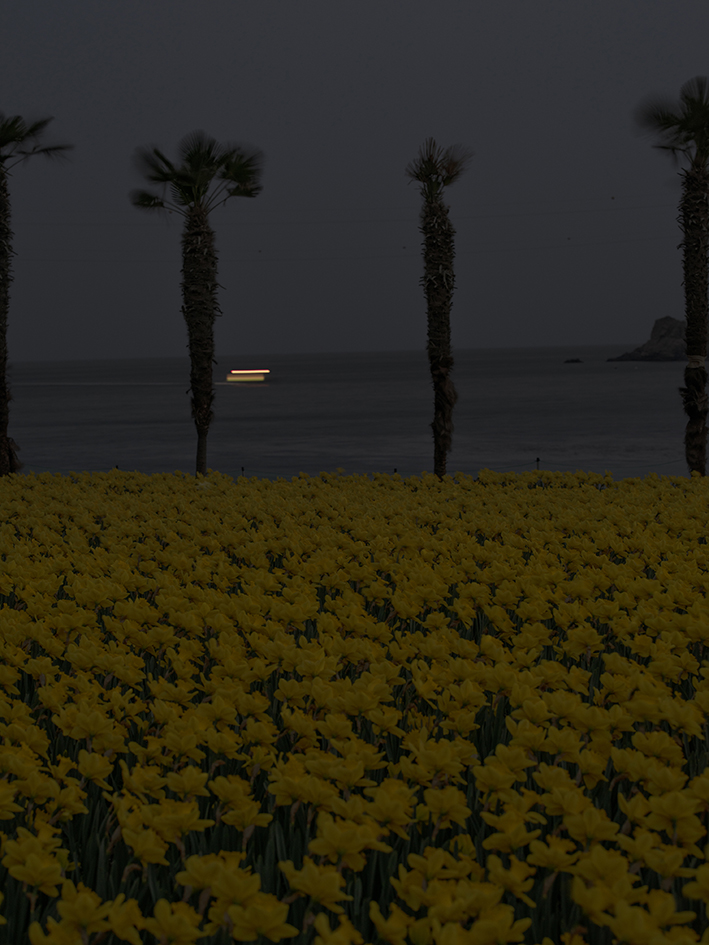
전명은 Eun Chun, 오래된 집 Old House, 2024, Archival pigment print, 48 x 36cm © Courtesy of the artist
전명은 Eun Chun, 오래된 집 Old House, 2024, Archival pigment print, 48 x 36cm © Courtesy of the artist
틈새에서 새어 나오는 빛으로
틈새에서 새어 나오는 빛은 벽의 금, 나무의 갈라진 틈, 오래된 선반 위에 남은 먼지와 함께 굴러다니며, 우리 주변에 함께 존재해 왔다. 어쩌면 빛은 태양이 뿜어내는 열기일지도 모르지만, 인간들은 그 안에서 수많은 이야기를 발견한다. 자연의 빛은 아무리 밀봉하려 해도 작은 틈만 있으면 흘러 들어와, 시간과 기억 속에서 눈에 보이지만 잡히지 않는 흔적을 남긴다. 구름과 구름 사이에서 흘러나오는 빛줄기를 통해 전시 《실버라이닝》은 이러한 틈과 빛을 따라, 시간을 되돌아보고, 그 사이에서 피어나는 이야기들을 관찰하려는 시도다.
작은 틈과 빛을 떠올리며 카메라 뷰파인더에 눈을 대고 있는 사람의 모습을 상상할 수 있다. 빛과 뗄 수 없는 사진은 전명은의 작업에 다다라, 사진이 품고 있는 빛으로 드러난다. <무제(금굴)>는 동굴의 안쪽에서 바깥을 향해 있다. 안의 크기를 상상할 수 없는 입구를 지나 거대한 내부로 들어가며 작가는 앞으로, 앞으로, 빛을 등지고 어둠으로 향했다. 촬영을 마치고 다시 돌아가려고 했을 때, 어둠에서 빛으로, 작가는 이것을 찍으러 온 것임을 깨달았다고 했다. 어느덧 해가 지고 너른 수선화밭을 마주한 채 멀리 빛이 보인다(<오래된 집>). 분명 인화된 사진임을 알고도, 붉게 전진하는 빛에서 눈을 뗄 수 없다. 횡으로 이동하는 빛은 어둑해진 세상에서 혼자만의 신호를 보내고 있다. 작가의 사진에서 드러나는 시간은 빛과 어두움의 세계를 촉각적으로 전환한다. 이 맞은편, 무언가 공중에 떠 있는 듯하다(<배클렘트 #39>). 바다생물 나무조각을 촬영한 것이라는 작가의 말에서 다시금 동굴의 안쪽에서 바라보는 빛과 어두워진 바다에 지나가는 배, 심해어를 대신한 물고기 조각까지, 어둠 속에서 빛나는 것들에게 보내는 작가의 시선을 떠올린다.
종횡무진 바다를 누비던 배의 돛과 닻은 바람과 땅을 잃은 몸(‘날개 없고 땅 없고 몸’ 연작)이 되었다. 날개 달린 듯 앞을 향하는 돛과 미끄러지듯 유영하는 커다란 몸체를 정박시키려는 닻은 김민훈에 의해 섬세한 손끝으로 겹쳐진다. 더는 본래의 기능이 없이 상징 언어로 존재하는 이 종횡의 조각은 제도와 규범에서 항해할 수 없는 이들을 위한 “조각적인 코멘터리”이다. 산업 폐기물을 몸체로 하여 시멘트를 표피로 삼았던 이전의 기둥에 비해 이번에 선보이는 기둥(‘태움 춤노래’ 연작)들은 숯과 시멘트 자체로 몸의 내부와 외부를 동시에 점한다. 숯을 동그랗게 두고 시멘트를 발라 켜켜이 쌓은 이 기둥은 ‘조적’의 전통을 뒤따른다. 쌓아 올리는 과정에서 숯의 틈 사이로 시멘트가 들어가 더욱 단단히 결합하는 방식으로 인해 “작은 파편들이 서로를 의지하는 모습”을 상상할 수 있다. 이러한 결합의 방식은 김민훈이 자유롭게 구사하는 매듭의 어법에서 확인할 수 있는데, 작가의 매듭이 만들어내는 무늬는 ‘전통매듭’과 ‘마크라메’의 방식을 넘나든다. 마치 한붓그리기처럼 긴 줄을 반으로 접어 중심에서 양쪽을 교차하며 만들어지는 전통매듭은 조이고 푸는 힘이 중요하다. 이에 반해 마크라메는 과정에서 줄을 추가할 수 있으며, 그 사이 조이는 모든 힘이 무늬가 된다. 지나온 모든 과정을 추적할 수 있는 세계와 힘의 강약을 통해 세상의 요소를 상징하는 세계가 김민훈의 작업 안에서 교차한다.
임선구는 그동안 기억을 물리적인 공간으로 건설하기 위해 종이의 물성을 극한까지 탐구하였다. 이번 전시에서는 그 이면에 오직 낱장의 종이와 연필로 자신의 기억을 붙잡아 두는 작가의 모습이 있다. 임선구의 작업에서 문은 또 다른 세계로 가는 텔레포트이자, 자신의 기억으로 향하는 통로이다. 문을 열고 들어가는 사람과 그 옆, 안쪽에서 보는 방의 풍경(’비스듬한 방’ 연작)에서 순차적으로 이동해야만 하는 공간의 물리적 구조는 의미를 상실한다. 기억은 시간과 장소의 원근을 따르지 않고 편집된 채 이곳저곳으로 이동한다. 갑작스레 떠난 작가의 반려동물을 떠올리며 시작했다는 ‘그 새벽은 가지 않을 듯이’ 연작에서는 위에서부터 하늘에 별이 가득한 시간, 그 아래 깊은 숲과 꽃밭을 지나 마치 작은 생명체가 늘 함께했을 따뜻한 집의 거실로 이어진다. “누군가는 죽음을 마주하고, 누군가는 진실을 숨기며, 또 누군가는 이미 떠난 이를 그리워한다”라는 문장을 변환하고자 했다는 작가의 말과 함께 시공간이 뒤섞이며 그리운 이를 쫓으려는 경험과 공명한다.
세 작가의 작업은 각기 다른 매체와 형식을 취하면서도, 공통적으로 우리가 쉽게 지나쳤을 수 있는 순간과 공간을 새롭게 환기한다. 그들은 틈새로 새어 나온 빛을 통해 또 다른 이야기를 열어가는 과정을 보여준다. 이러한 과정은 재현을 넘어, 시간이 겹치고 흔적이 이어지는 세계 속에서 우리가 무엇을 보고 기억할 수 있는지를 질문한다. 전시 《실버라이닝》은 이처럼 찰나의 순간에서 발생하는 가능성을 통해 잊힌 것을 되살리고 보이지 않는 것을 드러낸다. 이번 전시를 통해 빛을 따라 우리가 지나쳐온 틈새를 응시하며, 그곳에서 피어나는 이야기를 다시 읽어내는 장이 되기를 제안한다.
기획/글 민지영
김민훈(Minhoon Kim, b.1997)은 서울시립대학교 환경조각학과에서 학사를 서울대학교 조소과에서 석사를 졸업하였다. 개인전으로는 《깊게 얕은》(dive.seoul, 서울, 2025), 《나뭇등걸》(Hall 1, 서울, 2024), 《네 기둥》(보안1942, 서울, 2023), 《땅들, 케이크》(서교예술실험센터, 서울, 2023), 《GRABO》(서울시립대학교 빨간벽돌갤러리, 서울, 2022)를 개최했다. 주요 단체전으로는 《UnHouse》(프리즈 하우스 서울, 서울, 2025), 《조각 운동회》(서울대학교 파워플랜트, 서울, 2025), 《Bench Side》(d/p, 서울, 2023)와 그 외에 다수의 단체전에 참여하였다.
임선구(Sungoo Im, b.1990)는 서울과학기술대학교 조형예술과에서 학사와 석사를 취득했다. 개인전으로는 《축성법》(금호미술관, 서울, 2024), 《벽돌나비》(드로잉룸, 서울, 2022), 《보이지도않는꽃이: 발자국을 발굴하기》(세마창고, 서울, 2022), 《이상하고 평화로운 날들이었다》(학고재 디자인 프로젝트 스페이스, 서울, 2020), 《종이위의 검은모래》(갤러리 조선, 서울, 2019)가 있다. 주요 그룹전으로는 《다섯 발자국 숲》(국립현대미술관 과천 어린이미술관, 과천, 2024), 《두산아트랩 2022》(두산갤러리, 서울, 2022), 《낯선 여정》(드로잉룸, 서울, 2021) 등이 있다. 수원 푸른지대창작샘터(2025), 인천아트플랫폼(2023), 양주시립미술창작스튜디오(2022) 레지던시에 입주했던 바 있다.
전명은(Eun Chun, b.1977)은 중앙대학교 조소과에서 학사, 프랑스 파리8대학에서 사진전공으로 석사를 졸업하였다. 개인전 《북쪽창문으로》(피비갤러리, 서울, 2024), 《내가 안고 있는 겨울》(페리지갤러리, 서울, 2022), 《글라이더》(갤러리2, 서울, 2020), 《플로어》(서울시립미술관 SeMA창고, 서울, 2019)을 비롯해 총 10회의 개인전을 개최했다. 아마도 예술공간, 두산갤러리, 프라이머리프랙티스, 북서울미술관, 갤러리 2, 경기도미술관, 서울시립미술관, 하이트컬렉션, 뮤지엄 산, 송은아트스페이스, OCI미술관 등 다수의 단체전에 참여하였다. 서울문화재단 금천예술공장(2021), 서울시립미술관 난지미술창작스튜디오(2020), 국립현대미술관 고양레지던시(2017) 등의 레지던시에 입주한 바 있으며, 송은미술대상 우수상(송은문화재단, 2018)과 아마도사진상(아마도예술공간, 2017)을 수상하였다. 서울시립미술관, 경기도미술관, 대구미술관, 고은사진미술관, OCI미술관, 경기문화재단, 송은문화재단, 국립현대미술관 미술은행과 정부미술은행에 작품이 소장되어 있다.
By the Light Seeping Through the Gaps
The light that seeps through gaps has existed alongside us with the cracks in walls, the splits in wood, and the dust left on old shelves. Perhaps light is merely the heat the sun emits, yet people read countless stories into it. No matter how tightly sealed, light finds even the smallest opening and slips in, leaving visible yet untouchable traces within time and memory. Through the beams that stream between clouds, the exhibition 《Silver Lining》 follows these in-between spaces and lights in an attempt to look back on time and to observe the stories that bloom between them.
Thinking of small cracks and light, imagine a person with their eye to a camera viewfinder. Photography, inseparable from light, reaches in Eun Chun’s work, revealing itself in the light each photograph holds. Untitled (Kumgul) is oriented from the cave’s interior toward the outside. Passing through an entrance whose scale defies imagination and into a vast interior, the artist kept moving forward, turning their back on the light and heading into the dark. After finishing the shoot and preparing to return, Chun realized she had come precisely to photograph that moment — from darkness to light. At dusk she faces a wide field of daffodils and, beyond it, a distant glow (Old House). Even knowing the images are prints, one cannot take their eyes off the advancing red light. The horizontally moving light sends a signal that seems like I’m the only one left through the dimmed world. The sense of time in her photographs translates into a tactile experience of light and darkness. Opposite this, something seems to float in midair (Beklemmt #39). She said these are photographs of fish-shaped wood carving; again one recalls the light seen from inside a cave, ships passing on a darkened sea, and fish-like object floating in for deep-sea creatures — a sustained gaze on the things that shine within the dark.
The sails and anchors of ships that once roamed the seas have become bodies bereft of wind and ground (Wingless Groundless Torso series). Sails that suggest wings pushing forward and large bodies that glide like swimming are overlapped by Minhoon Kim’s delicate hand to make anchors that attempt to moor them. These crisscrossed sculptural works — no longer serving their original functions and now existing as symbolic language — function as a “sculptural commentary” for those who cannot navigate within institutions and norms. Compared with earlier beams that used industrial waste as a body and cement as a skin, the pillars shown in this exhibition (Birdfeet—Burnt Ballad series) mark both the interior and exterior of a body through charcoal and cement themselves. By placing charcoal discs and layering cement, these pillars follow the tradition of masonry. In the process of stacking, cement penetrates the gaps between pieces of charcoal and binds them more firmly, evoking an image of “small fragments relying on one another.” This mode of joining is also evident in his freely applied syntax of knots: the patterns created by his knots traverse the methods of traditional knotting and macramé. Like a single-stroke drawing, traditional knots—made by folding a long cord in half and crossing both sides from the center—depend on the tension of tightening and loosening. In contrast, macramé allows additional cords during the process, and all the tensions tightened in between become the pattern. In his work, a domain in which one can trace all past processes intersects with a symbolic world of the elements through variations in force and intensity.
Sungoo Im has been explored the materiality of paper to construct memory as a physical space. This exhibition reveals, behind those works, the artist seated at a small desk using only single sheets of paper and a pencil to hold on to memory. In her work, a door functions as a portal to another world and a passage toward her own memories. In the Oblique Room series, the building’s structural logic — one that would require sequential movement from near to far — becomes lose their meaning. Memory moves in an edited fashion across places, disregarding the linear perspective of time and location. In the series As If That Dawn Would Never Fade, begun with the memory of her suddenly departed companion animal, images run from a star-filled sky above, through deep forests and flower fields, and at last into a living room that feels as if a small creature has always been present. Her intention to represent metaphor “some face death, some hide the truth, and some miss those already gone” into images reverberates as time and space intertwine, and with it a yearning to follow the lost.
The three artists, each working in different media and forms, commonly reawaken moments and spaces we might easily have overlooked. They demonstrate how light that has seeped through gaps opens other narratives. This process goes beyond representation; it asks what we can see and remember within a world where times overlap and traces persist. 《Silver Lining》 thus affirms how ephemeral moments generate possibilities reviving the forgotten and revealing the unseen. Through this exhibition, we invite viewers to follow the light and gaze into the gaps we have passed by, proposing a space to revisit and reread the stories that emerges from within.
Curated and written by Jiyoung Min
Minhoon Kim(b. 1997) received his BFA in Environmental Sculpture from the University of Seoul and an MFA in Sculpture from Seoul National University. His recent solo exhibitions include Deeply Superficial (dive.seoul, Seoul, 2025), The Stump (Hall 1, Seoul, 2024), Four Beams (Boan1942, Seoul, 2023), LANDS, CAKE (Art Space Seogyo, Seoul, 2023), and GRABO (UOS Redbrick gallery, Seoul, 2022). Major group exhibitions include UnHouse (Frieze House Seoul, Seoul, 2025), Sculptural Sports Day (Seoul National University Power Plant, Seoul, 2025), Bench Side (d/p, Seoul, 2023) etc.
Sungoo Im(b. 1990) earned both her BFA and MFA in Department of Fine Arts from Seoul National University of Science and Technology. Her recent solo exhibitions include A Castle Built of Dust (Kumho Museum of Art, Seoul, 2024), Wall • Rock • Flood • Oneself (drawingRoom, Seoul, 2022), A Flower Which Can’t Even Be Seen: Excavating Footprints (SeMA Storage, Seoul, 2022), The Days Were Strange and Peaceful (Hakgojae Design Project Space, Seoul, 2020), and Black Sand on Paper (Gallery Chosun, Seoul, 2019). She has participated in major group exhibitions such as Dear My Forest (National Museum of Modern and Contemporary Art, Gwacheon, 2024), Doosan Artlab 2022 (Doosan Gallery, Seoul, 2022), and Unfamiliar Expedition (drawingRoom, Seoul, 2021). Im has also taken part in residency programs at Suwon Art Studio (Korea, 2025), Incheon Art Platform (Korea, 2023), and Yangju Art Studio (Korea, 2022).
Eun Chun(b. 1977) received BFA in sculpture at Chung-Ang University and Master d’Arts, mention Arts plastiques, spécialité Photographie at Université Paris 8. Her recent solo exhibitions include To the North Facing Window (PIBI Gallery, Seoul, 2024), Winter in My Arms (Perigee Gallery, Seoul, 2022), Glider (Gallery 2, Seoul, 2020), and Floor (SeMA Storage, Seoul Museum of Art, Seoul, 2019), among a total of ten solo presentations. Chun has participated in numerous group exhibitions such as Amado Art Space, DOOSAN Gallery, Primary Practice, Buk-Seoul Museum of Art, GALLERY2, Gyeonggi Museum of Modern Art, Seoul Museum of Art, HITE Collection, Museum SAN, and SongEun Art Space, etc. Residencies include Seoul Art Space Geumcheon (2021), SeMA Nanji Residency, Seoul Museum of Art (2020), and MMCA Goyang Residency, National Museum of Modern and Contemporary Art Korea (2017). Awards include the SongEun Art Award—Excellence Prize (SongEun Art and Cultural Foundation, 2018) and the Winner of Amado Photography Award (Amado Art Space, 2017). Her work is held in public and private collections including Seoul Museum of Art, Gyeonggi Museum of Modern Art, Daegu Art Museum, GoEun Museum of Photography, OCI Museum of Art, Gyeonggi Cultural Foundation, SongEun Art and Cultural Foundation, Government Art Bank, and Art Bank in MMCA.